Another stick for the ‘stack
Cameron's procrastination flatbow

I’m not dead, I’m just stumped for writing.
I am the king of excuses and procrastination( is it possible to be the monarch of two skills?). Between politics, projects at home, studying for my CDL, and a general lack of doing anything new and exciting, I’ve been staring at half-written articles for more than a month.
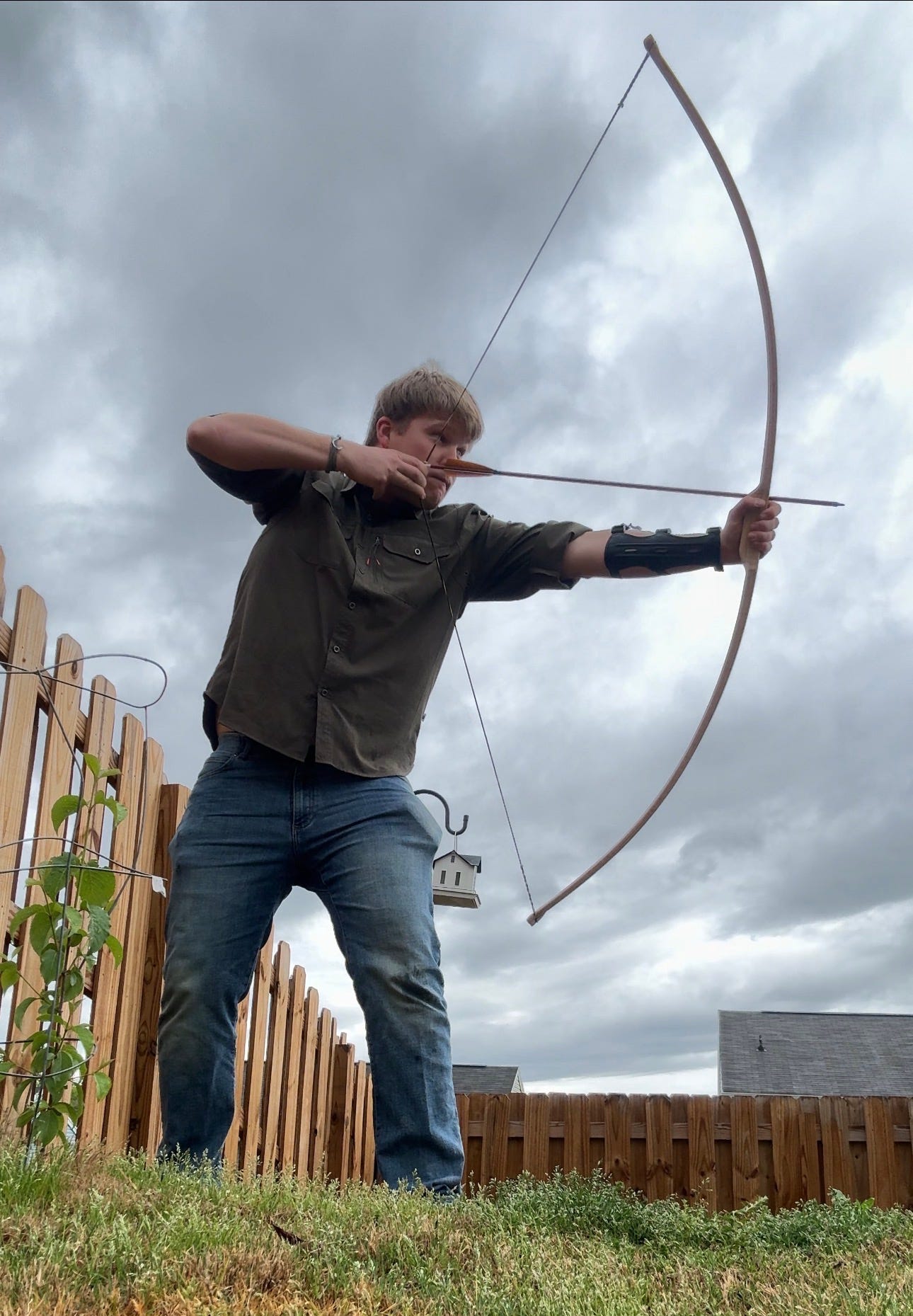
One thing I have been doing is slowly working on another bow. My last one came in too light for hunting, so this one is aiming for a higher poundage. This bow is an American flat bow style instead of the English longbow (called longbows for short from here on out) that I previously made. Flat bows get their power from wider, thinner limbs, relying on the elasticity of the wood to create the energy that transitions from potential to kinetic. This differs from the longbow, whose narrow, rounded limbs require both elasticity and compression to propel the arrow. That’s one reason why you won’t see many, if any, longbows made out of fiberglass.
Flat bows can and often do have pronounced handles, with many modern iterations having arrow shelves to: 1) bring the arrow closer in line with the string and 2) improve accuracy, as the arrow will rest in the same place, unlike off the knuckle on my longbow.
The handle section can be a point of embellishment since it doesn’t bend. Many bows feature laminate or dissimilar woods for contrast. I, being the pragmatist on this bow, opted for a cut-off piece of red oak, just like the bow.
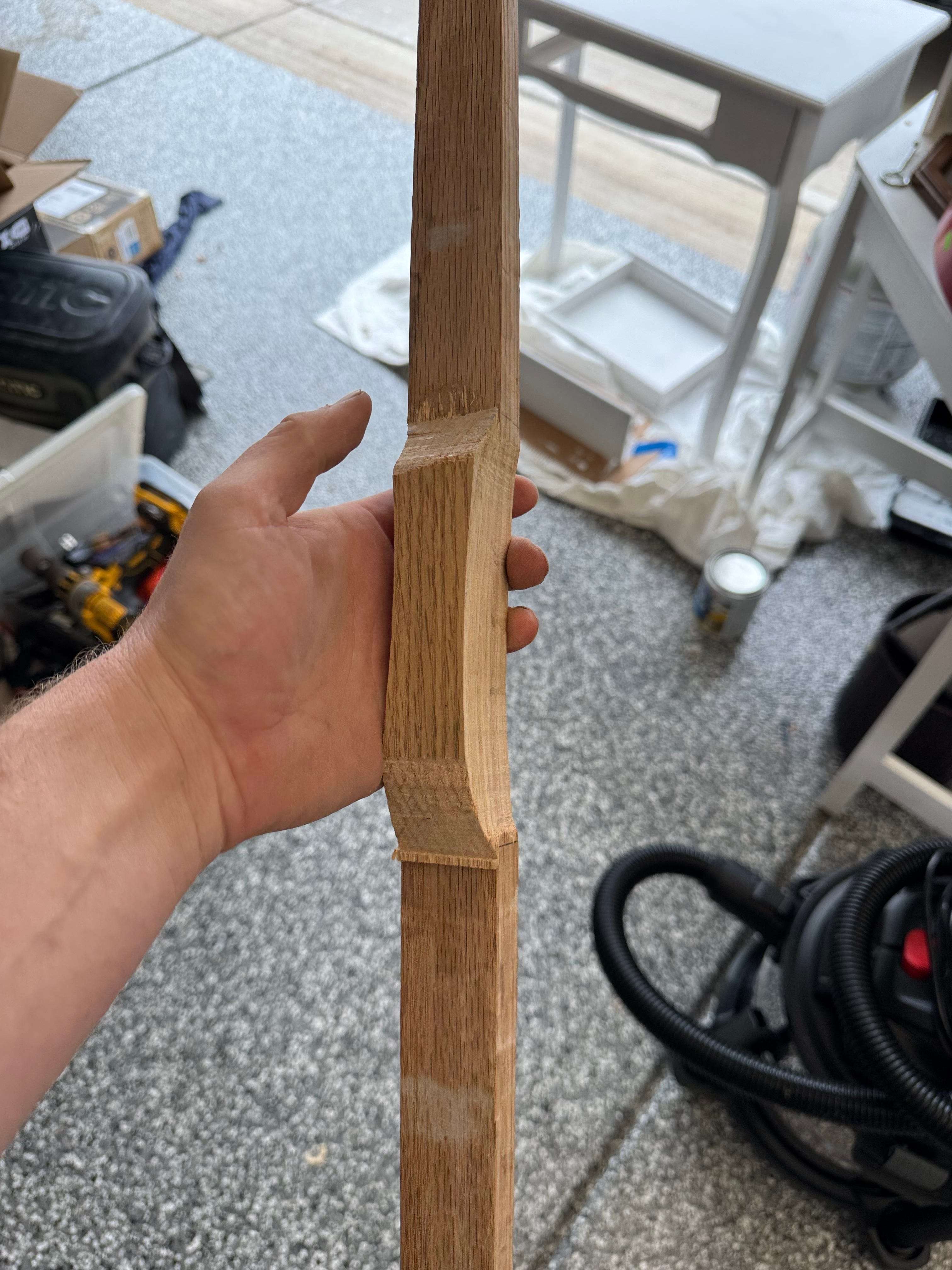
I’ve been using a couple of planes for most of my woodworking, along with a spoke shave that is giving me a fair bit of trouble. The tool's simplicity makes it less forgiving to adjust, and it doesn’t help that I went cheap on the spoke shave, so it may just be a junky tool. Some of the handle shaping was done with a jigsaw, and the rounding was done with a wood rasp.
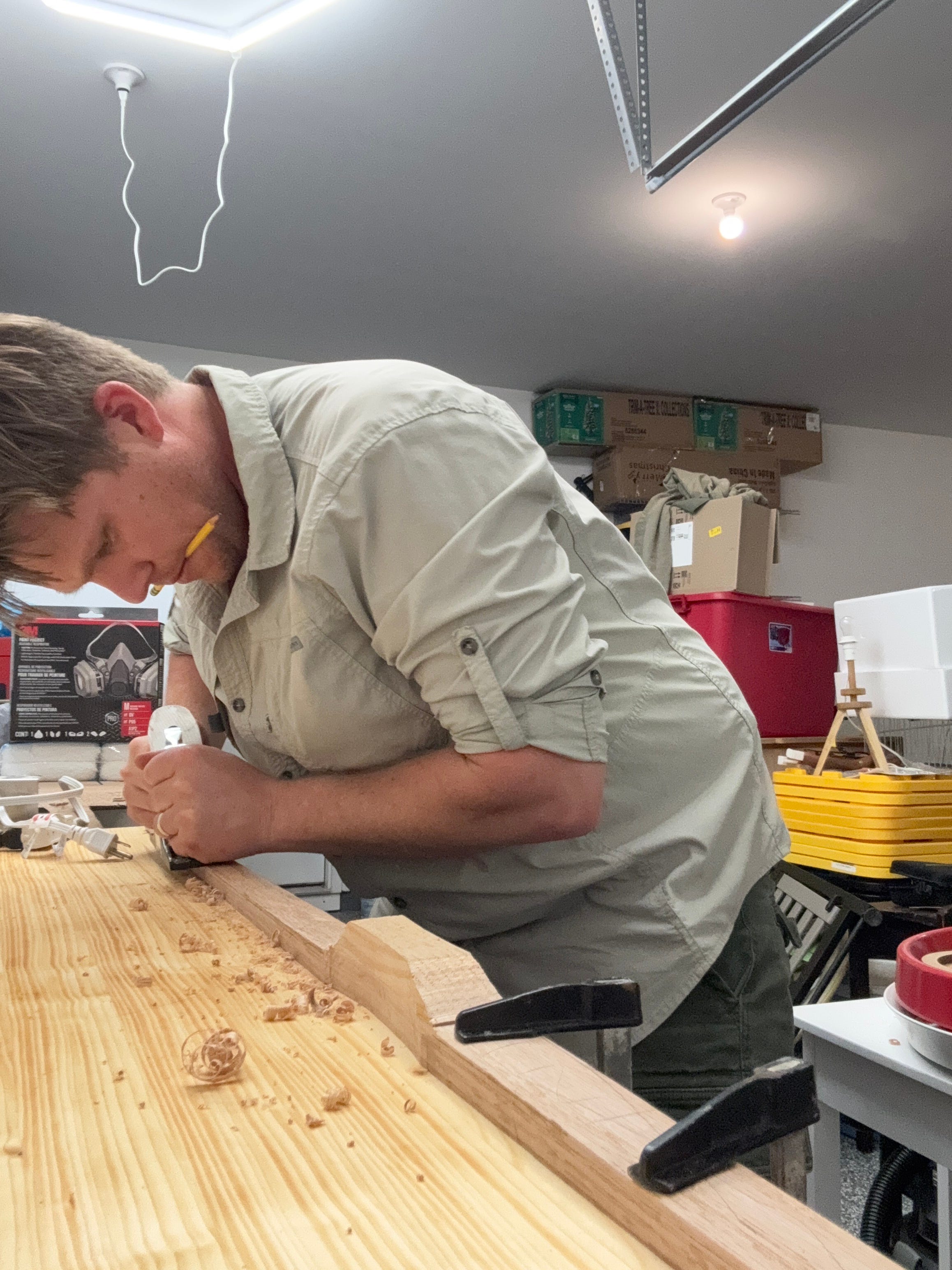
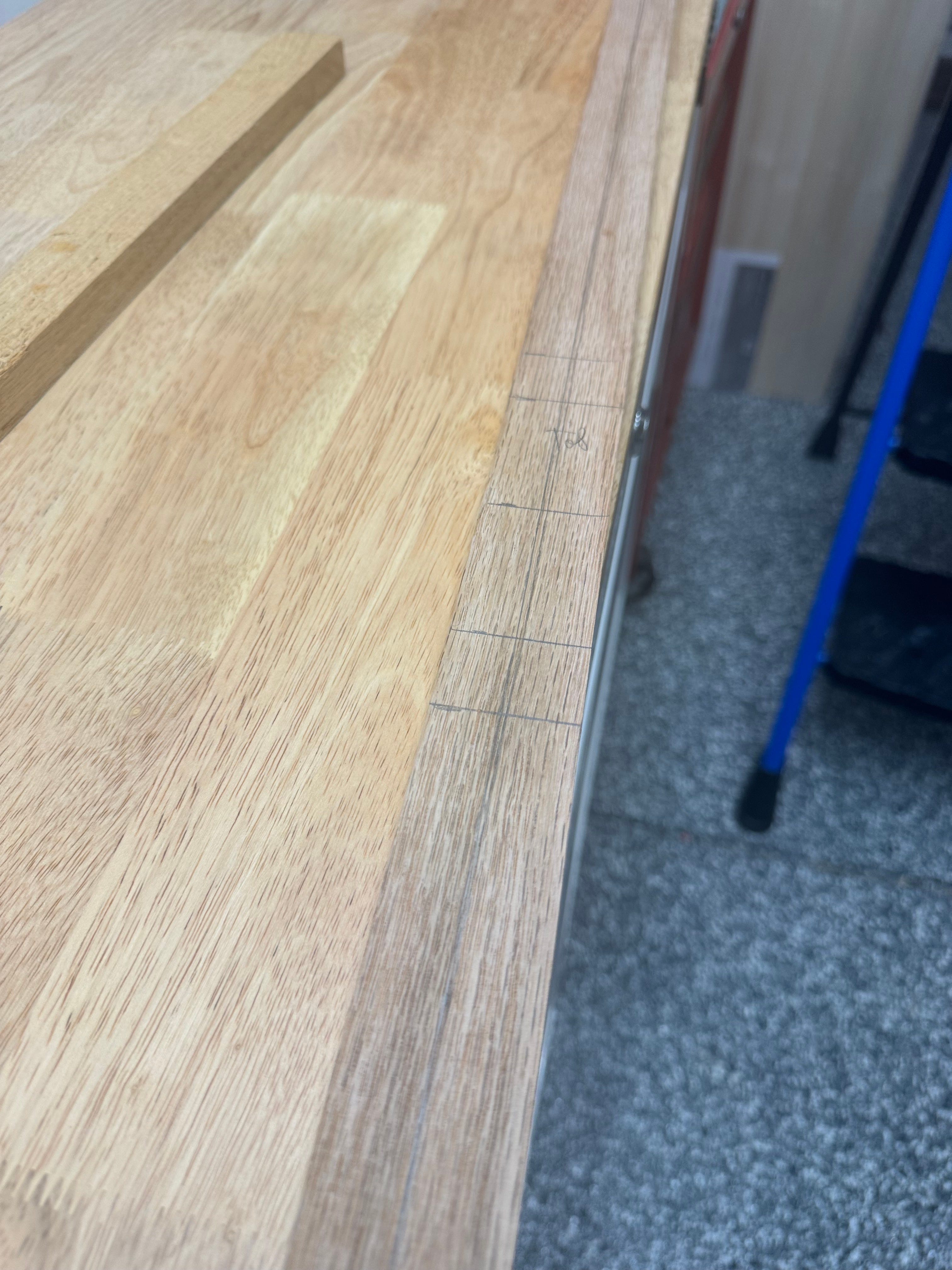
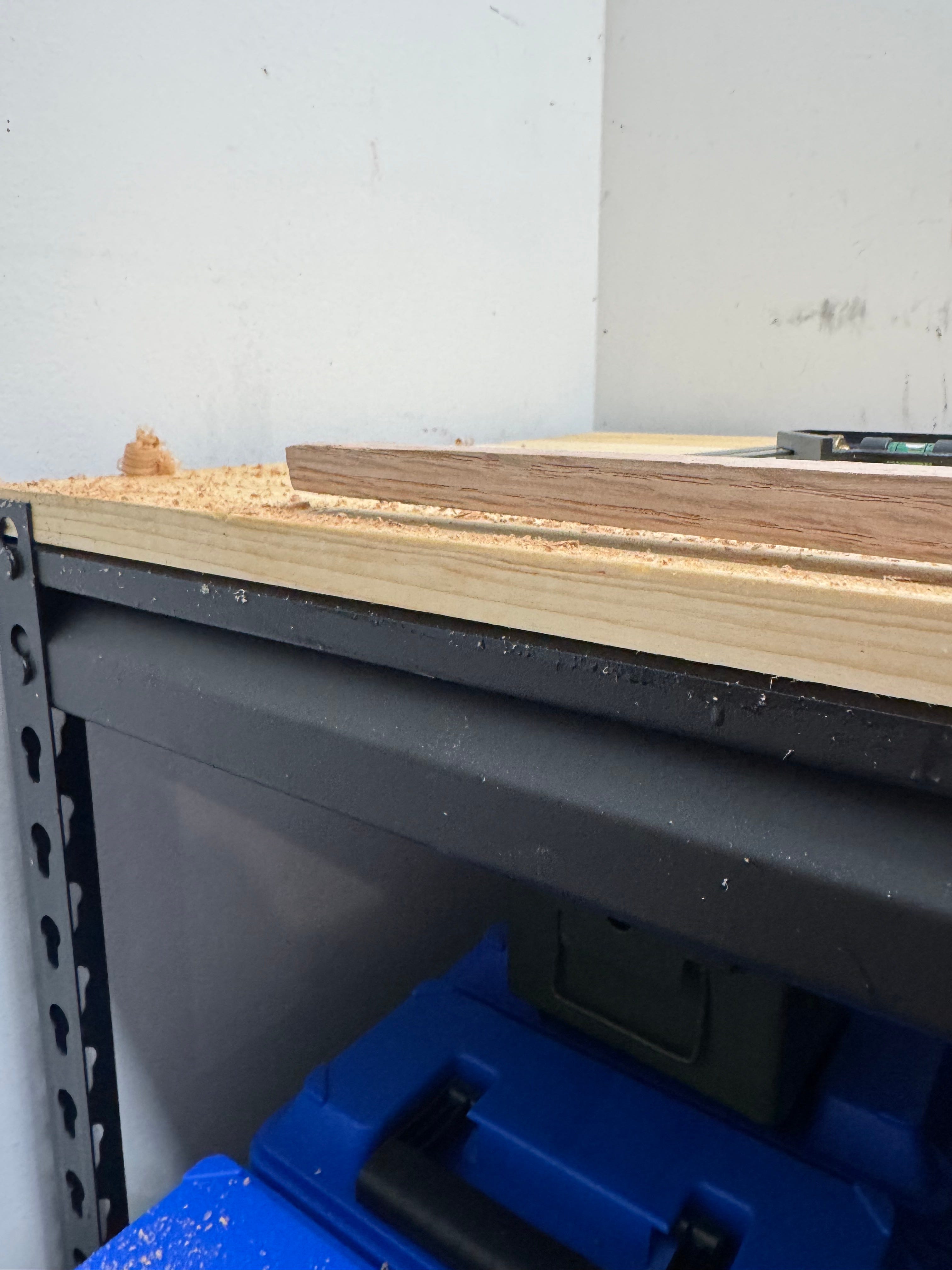
Once the initial limb width is reached, we can begin reducing the thickness. For a 50ish-pound bow, a 1/2-inch-thick limb is about right. I’m a bit proud of that near the handle, and when everything is finished, I imagine my tips will be more like 7/16ths. I was able to mark those thicknesses out using a square and a pencil.
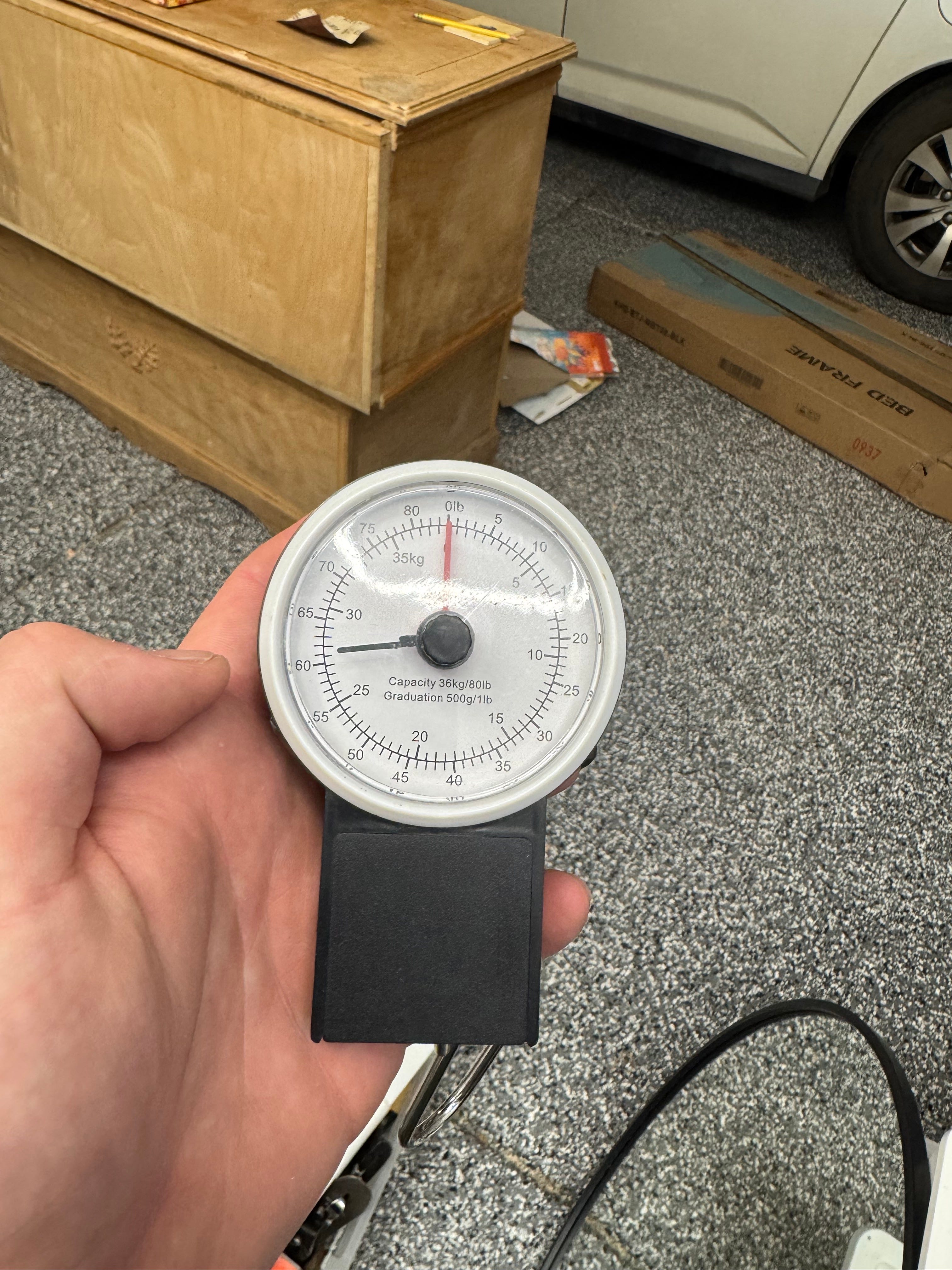
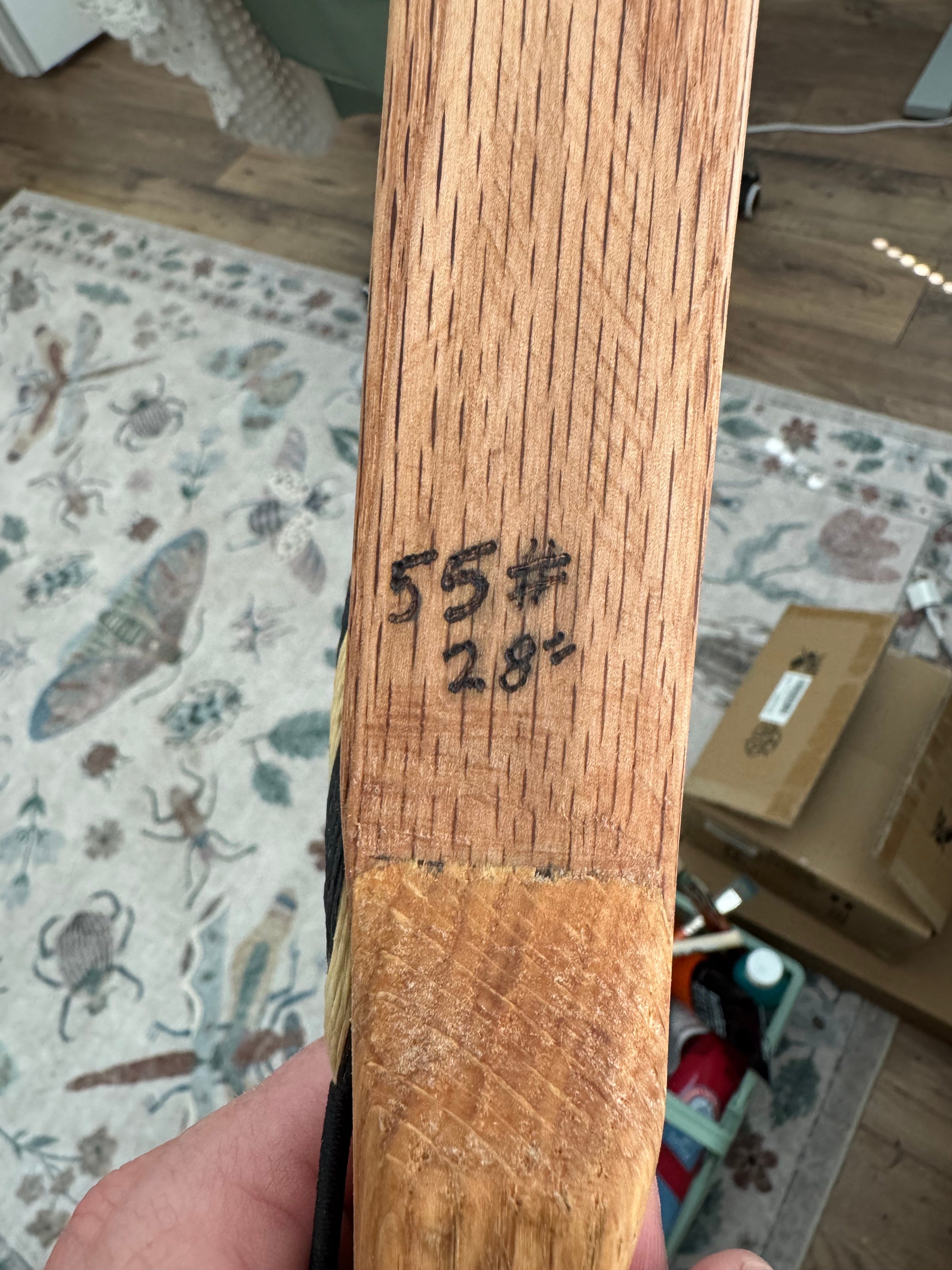
The 50-pound goal, I got it wrong. My bow drew at 65 pounds, and I worked it to just north of 60. After the final sanding and sealing it was 55 pounds at 28” if not just shy of it. I happen to draw at around 29” since I have ape arms which make finding dress shirts and arrows difficult. Yes, I could keep sanding the limbs, but I also know I can shoot a 60-pound bow with some practice. As a result, I'm going to be stubborn and draw a heavier bow. I added nocks of mahogany since I had a few scraps in my container of off-cuts and widgets.
I omitted the arrow rest for a rounded handle that fits my hand well. My final goal will involve some form of handle wrap, but for now, it's just bare wood.
I marked the limb weight with my wood burner that my father in law gave me for Christmas and for a first attempt I'm happy with it. My penmanship doesn't get much better than that anyway.
Every night as part of my routine before sundown, I dragged my target out to the backyard and sent three arrows. I understand that a higher rep, lower weight would be more beneficial, but I’m also trying to ensure that this bow holds up to the strain of being shot. I can also confidently say that three shots are enough to give me good consistency, and I feel overly confident in my shooting ability.
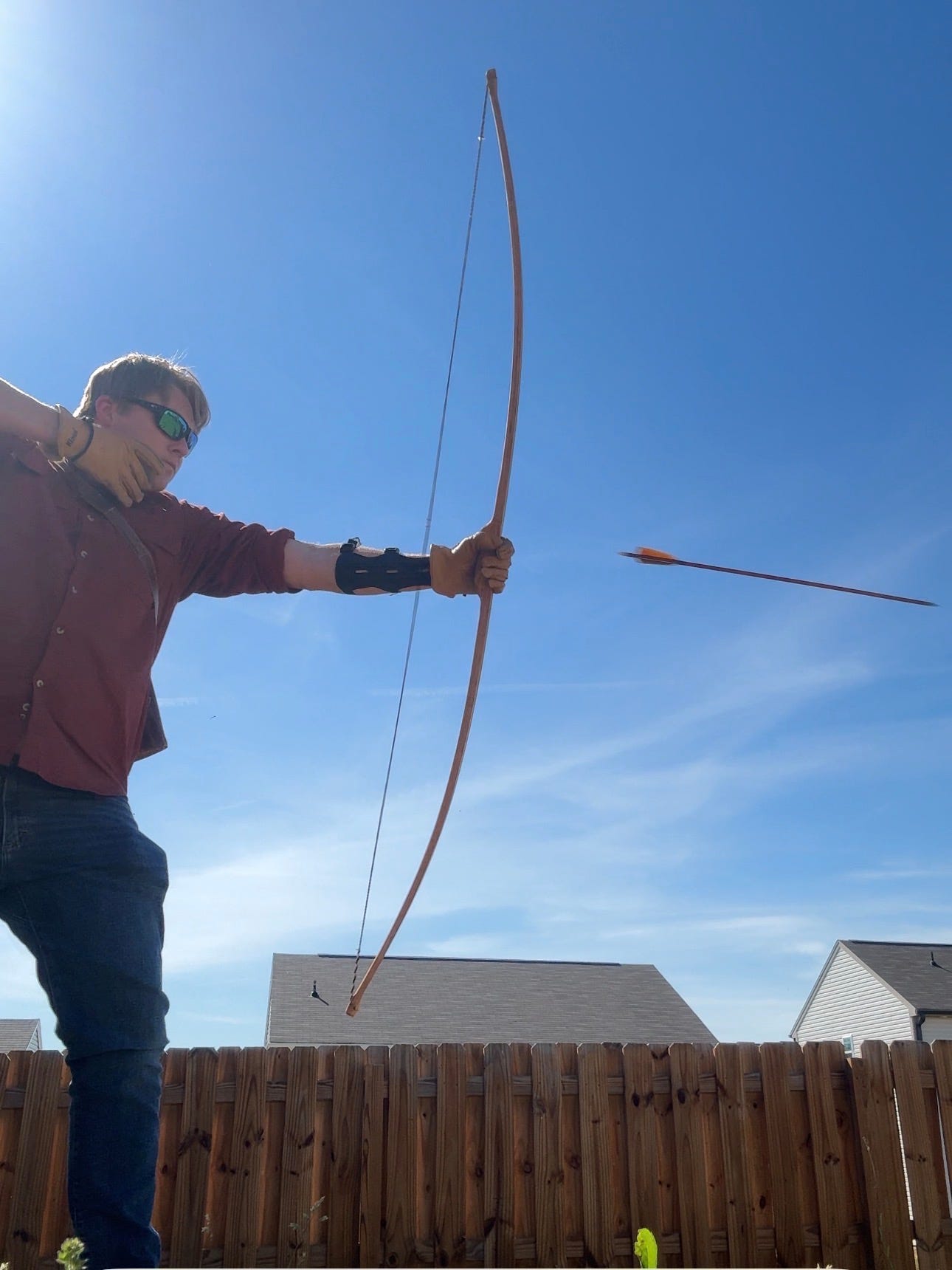
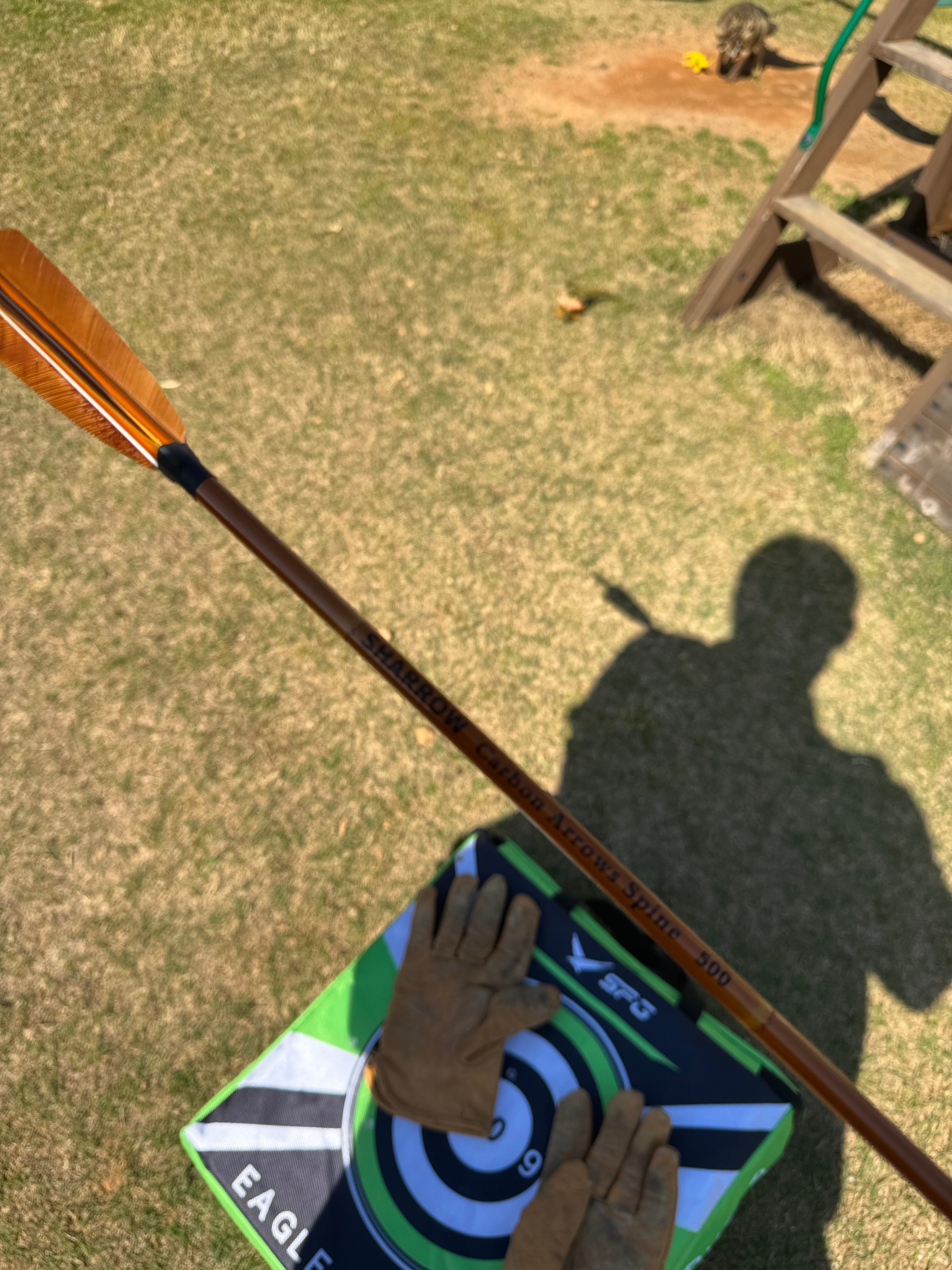
Arrows on self bows can certainly be any material but I am starting to prefer carbons. The narrow diameter and flex allows them to bend around the handle when shot. Being able to swap heads out is a bonus too. These are budget carbon arrows from china that I must say have a pretty snazzy wrap to look like river cane. The 500 spine is a little too light but again, having the ability to move around the handle rather than deflect with a stiffer spine is the tradeoff I am willing to take.
For my bow string I ordered from an Etsy seller by the name of Predator Archery I highly recommend them for the speed of delivery and ability to customize the length of strings based on your project.